
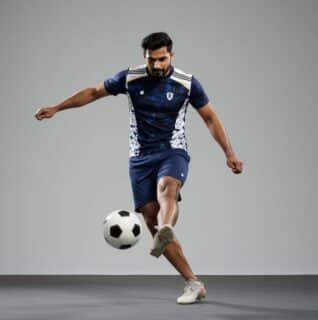

From Runway to Reality: AI Photoshoots Revolutionize Jersey Design
Revolutionizing Fashion: The Rise of AI Photoshoots for Jerseys
The fashion industry is undergoing a significant transformation, driven by technological advancements and changing consumer preferences. One innovation that’s gaining traction is AI-powered photoshoots for jerseys. This cutting-edge approach is revolutionizing product visualization, offering numerous benefits for brands, designers, and customers alike.
The Benefits of AI Photoshoots
- Cost-effectiveness: Traditional photoshoots involve significant costs, including model fees, location rentals, and equipment expenses. AI photoshoots eliminate these costs, allowing brands to allocate resources more efficiently.
- Increased flexibility: With AI, designers can experiment with various designs, colors, and styles without physical constraints. This flexibility enables rapid iteration and innovation.
- Enhanced creativity: AI-powered tools can generate new ideas and concepts, pushing the boundaries of creativity. Designers can explore fresh perspectives, resulting in unique and captivating jersey designs.
- Faster turnaround: AI photoshoots enable rapid generation of high-quality visuals, streamlining the design process and reducing time-to-market.
Applications in Jersey Design
- Customization: AI-powered tools can generate personalized jersey designs, allowing customers to create unique products that reflect their individuality.
- Virtual try-on: AI-driven virtual try-on capabilities enable customers to see how jerseys fit without physically trying them on, enhancing the online shopping experience.
- Design exploration: AI can generate multiple design variations, enabling designers to explore different concepts and identify top-performing designs.
Industry Impact
- Sustainability: By reducing the need for physical prototypes, AI photoshoots contribute to a more sustainable fashion industry, minimizing waste and environmental impact.
- Efficiency: AI-powered automation streamlines design processes, freeing up creative resources for high-value tasks.
- Customer engagement: Interactive and immersive AI-powered experiences increase customer engagement, driving brand loyalty and conversion rates.
The Future of Fashion
As AI technology continues to evolve, we can expect even more innovative applications in the fashion industry. Potential developments include:
- Advanced personalization: AI-driven systems that generate bespoke jersey designs based on individual preferences and characteristics.
- Virtual fashion shows: AI-powered platforms that enable virtual fashion shows, reducing costs and increasing global accessibility.
- Collaborative design: AI-facilitated collaboration between designers, brands, and customers, driving co-creation and innovation.
In conclusion, AI photoshoots for jerseys are revolutionizing the fashion industry, offering numerous benefits, including cost-effectiveness, increased flexibility, and enhanced creativity. As the technology continues to advance, we can expect even more innovative applications, transforming the way fashion brands design, produce, and market their products. By embracing AI-powered solutions, fashion companies can stay ahead of the curve, driving growth, sustainability, and customer satisfaction.
At Inkholic, we’re harnessing the power of AI to revolutionize jersey design with our cutting-edge AI model photoshoot technology, enabling faster, more flexible, and highly customizable product visualization
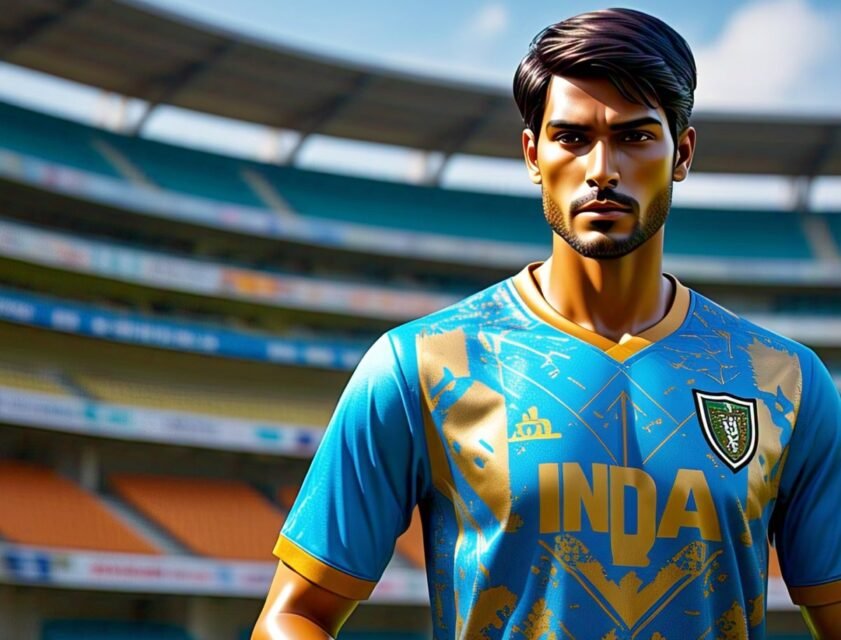
The Ultimate Sports Jersey goal
The Ultimate Sports Jersey: Made from Dot Knit Dry Fit Polyester with Sublimation Printing
When it comes to sports jerseys, athletes and enthusiasts alike demand high-quality, comfortable, and stylish apparel that can keep up with their active lifestyle. One material that has gained popularity in recent years is dot knit dry fit polyester, paired with sublimation printing. This winning combination has revolutionized the world of sports jerseys, offering unparalleled comfort, durability, and visual appeal.
The Benefits of Dot Knit Dry Fit Polyester
Dot knit dry fit polyester is a type of fabric that has been engineered to provide exceptional moisture-wicking properties, breathability, and comfort. The unique dot knit construction allows for airflow and flexibility, making it perfect for high-intensity sports and activities. The dry fit technology ensures that the fabric dries quickly, preventing discomfort and chafing.
Sublimation Printing: A Game-Changer for Sports Jerseys
Sublimation printing is a cutting-edge technique that allows for vibrant, full-color designs to be infused into the fabric. This method ensures that the prints are durable, long-lasting, and resistant to fading. The result is a jersey that looks great, even after repeated washing and wear.
The Perfect Combination
When dot knit dry fit polyester is paired with sublimation printing, the result is a sports jersey that is both functional and fashionable. The fabric provides comfort and performance, while the sublimation printing adds a level of visual appeal that is unmatched by traditional printing methods.
Why Choose Dot Knit Dry Fit Polyester with Sublimation Printing?
Whether you’re an athlete, coach, or sports enthusiast, a Sport jersey made from dot knit dry fit polyester with sublimation printing is an excellent choice. The benefits include:- Unparalleled comfort and breathability- Durable, long-lasting prints- Vibrant, full-color designs- Moisture-wicking properties for dry performance- Perfect for high-intensity sports and activities
In conclusion, a sports jersey made from dot knit dry fit polyester with sublimation printing is the ultimate choice for anyone looking for high-quality, comfortable, and stylish apparel. With its unbeatable combination of performance, durability, and visual appeal, this material is sure to revolutionize the world of sports jerseys.

Know Your T-Shirt
A T-shirt (or t shirt, or tee) is an apparel named after the T shape of its appearance. It normally has half sleeves and a round neckline sometimes referred as a crew neck, which lacks a collar. T-shirts are generally made of cotton mostly combed cotton.
Combed cotton is a kind of cotton that has been combed to make the yarn stronger and softer. The combing process also rids the batch of shorter fibers and impurities, which results in a finer, stronger and more compact cotton. While Regular cotton made from the cotton plant is developed using cellulose with a thin coating of wax. This creates a thin cotton fiber that is similar to a hollow tube, much like a straw. Basic cotton fiber is used to make things such as shirts, pants and other clothes.
T-shirts are typically made of cotton jersey knit, it has a distinctively pliable texture compared to shirts made of woven cloth. Most modern versions have a body made from a continuously woven tube, produced on a circular loom, such that the torso has no side seams. The manufacture of T-shirts has become highly automated and may include cutting fabric with a laser or a water jet.
The T-shirt evolved from undergarments used in the 19th century and, in the mid-20th century, transitioned from undergarment in US Navy to general-use casual clothing. The T-shirt was easily fitted, easily cleaned, and inexpensive, and for those reasons it became the shirt of choice for young boys. The word T-shirt became part of American English by the 1920s, and appeared in the Merriam-Webster Dictionary. In the 1960s, printed T-shirts gained popularity for self-expression as well for advertisements, protests, and souvenirs.
Current versions are available in many different patterns, prints and fabrics, and styles include crew-neck, Henley neck, V-neck shirts. T-shirts are among the most worn garments of clothing used today. More than a Billion T-shirts are produced worldwide per annum. T-shirts are especially popular with branding for companies or merchandise too. Now many merchants are selling online t-shirts in india.